Article: Scotland for Eternity - Harris Tweed

Scotland for Eternity - Harris Tweed
Ever since the fabric with its characteristically coarse texture conquered the world of haute couture and with it the runways of the most sought-after fashion shows, everyone knows it... tweed!
This pure new wool, with a rough hand as rugged as the climate of the British Isles where it once served as protection against wind and cold, represents its origin and history like hardly any other fabric.
But what is it about tweed that has kept its fascination alive to this day?
Here you will learn what to look for when buying, how to recognise genuine tweed and how Harris Tweed differs from other tweeds.
Table of contents
- What is Harris Tweed?
- Why not all tweed is the same
- Production, authenticity & quality: checklist - what is 'mandatory' for Harris Tweed
- Care: how to keep tweed for generations, not just one season
- Styling tips: outfit ideas from weddings to business casual to country
What is Harris Tweed?
It is regarded as the aristocrat in the world of tweed and, thanks to its consistently high standards, holds an unbroken special status - Harris Tweed, rooted in Scotland, handwoven and protected by law.
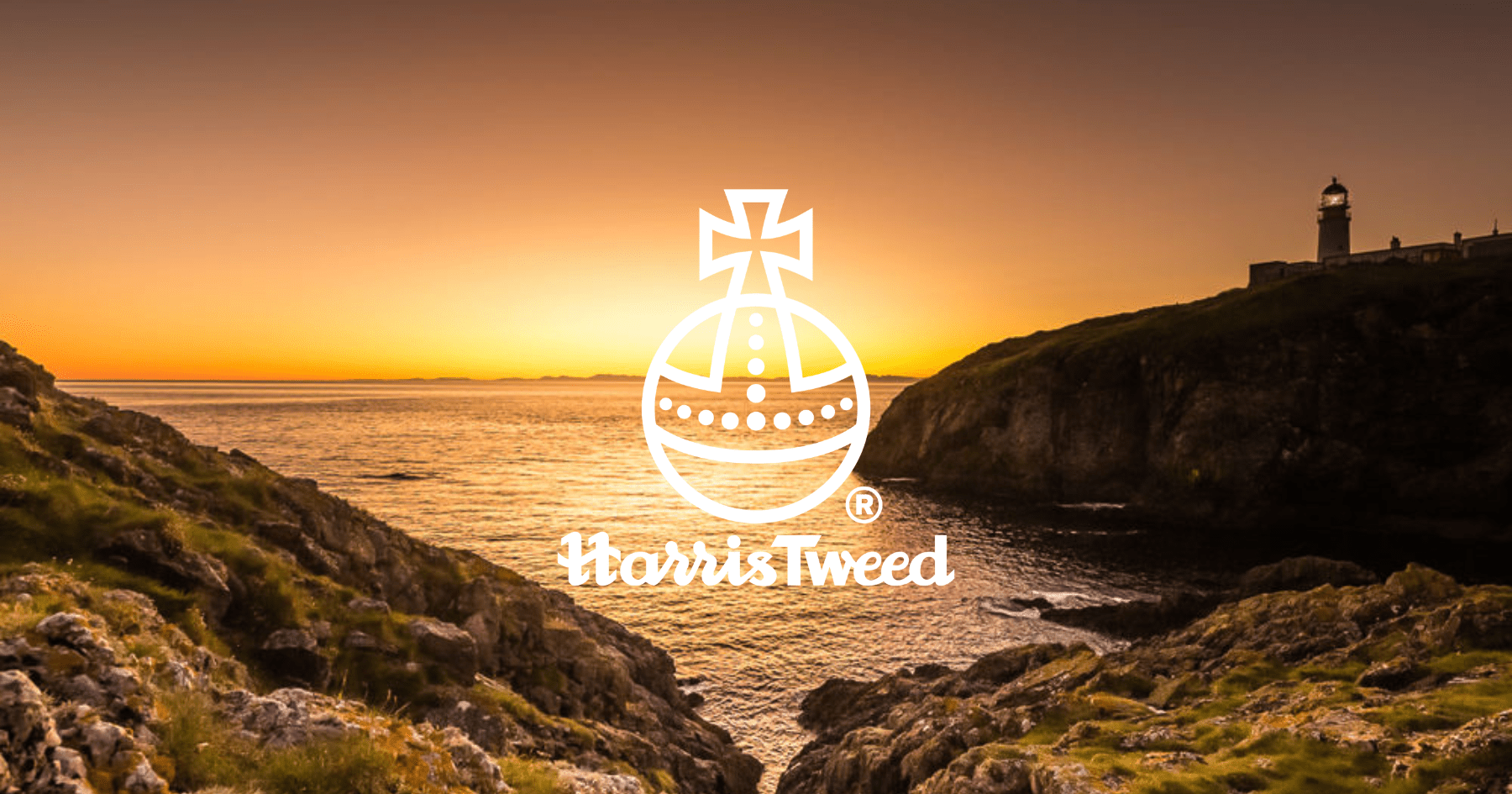
Harris Tweed is a tweed legally defined by the Harris Tweed Act 1993 (an Act of Parliament) and protected by the Harris Tweed Authority as the supervising body.
This means that a fabric may only carry the name and the trademark - the orb topped with a Maltese cross - if it is:
- made from pure new wool,
- dyed and spun in the Outer Hebrides
- and handwoven by the islanders in their own homes.
Only then is the fabric awarded the trademark by hand - the so-called Orb symbol.
Matching collections: Suits · Tweed jackets & waistcoats
Why not all tweed is the same
Tweed is not a protected term and is therefore also used as such for blended fabrics with a 'tweed look'. The robust, sustainable wool fabric is authentic when it is made from pure new wool and comes from the British Isles. But there are clear differences here.
Regional variants with their own characteristics, such as Harris Tweed (Scotland) or Donegal (Ireland), as well as Yorkshire and West England.
There are also different production methods, which are reflected in clear differences in the production costs of handwoven versus machine-woven tweed.
The types of wool and weaves used also lead to noticeable differences in hand - that is, in texture, thickness and softness.
Cheviot, for example, the wool of the sheep from the upland region on the border between England and Scotland, has a longer-stapled, coarser fibre structure than the somewhat shorter, fluffier Shetland wool of the sheep of the Scottish Shetland Islands.
Patterns and colours range from herringbone to barleycorn to glen check, to name just a few.
Origin may be indicated by a brand name or, as in the case of Harris Tweed, by a protected designation of origin.
This makes it clear: 'tweed' is broad, whereas 'Harris' is defined.
Production, authenticity & quality: checklist - what is 'mandatory' for Harris Tweed
Harris Tweed is only 'genuine' if it carries the 'Orb' mark on the fabric in the form of a label or stamp. This certification logo seals compliance with the required legal standards and serves as proof of origin and quality.
In short - the 'big four':
- Material: 100%, i.e. pure new wool
- Origin: the Outer Hebrides, covering the entire production process
- Handcraft: genuine handwoven fabric from the Outer Hebrides
- Control: by the Harris Tweed Authority, the guardians of the Orb
This makes every metre of fabric unique.
Care: how to keep tweed for generations, not just one season
A high-quality tweed is easy to care for, as pure new wool has a natural self-cleaning ability.
Thanks to the high density of the fleece taken from the sheep, it offers natural warmth and moisture regulation, is water-repellent and resistant to creasing.
Since tweed lives from its texture, it is important to care for it properly - and that is very simple:
- airing it out after wearing is enough
- for light soiling, brush it off with a soft clothes brush or dab spots with a damp cloth
- in extreme cases, take it to a dry cleaner
- generally hang it in a dry, well-ventilated place
Styling tips: outfit ideas from weddings to business casual to country
The classic:
If you want the classic 'sophisticated' British style, you can go all in.
For an authentic look, however, we like to recommend an outfit with a tweed jacket, either combined with a tweed waistcoat or, on cold days, a knitted jumper or knitted waistcoat over the shirt. Add corduroy trousers or jeans and leather boots or wellingtons. On warmer days, a simple shirt or tee under your jacket or tweed waistcoat rounds off the look.
And if you like, a tweed cap always works!
Shop now: Tweed jackets & waistcoats · Knitwear (men) · Corduroy trousers · Tweed caps · Shirts
The occasion:
For weddings or other events, the three-piece tweed suit is ideal.
Best dressed from head to toe with shirt, accessories and goodyear-welted shoes.
Not just for the groom!
Planning & outfit building blocks: Wedding glossary · Suits · Accessories · Shoes
Smart Casual:
Business without the strictness of a suit works effortlessly with tweed - without losing a professional air.
Whether in a tweed suit for a meeting or with a Harris Tweed jacket combined with a shirt and tie, paired with quality cotton trousers and goodyear-welted derbies for the office.
Business capsule: Suits · Shirts · Shoes
In conclusion:
Tweed is not just a fabric, it is a statement!
And anyone who wears Harris Tweed is not simply wearing fashion - but origin and history, with great brand recognition.
Keep browsing: Tweed jackets & waistcoats · Suits · Wedding glossary