
In our Shoe Lexicon you can read everything worth knowing about the quality of Crocket’s Shoes: what does “Goodyear-welted shoe” actually mean? What classic shoe shapes are there? And what sole variants? And finally: how should you care for leather shoes so that they last and always look good?
What does “Goodyear-welted shoes” mean?
To begin with, good Goodyear-welted shoes are handmade. The sole is stitched by hand, not merely glued to the welt. Our welts are stitched by the “Goodyear welted” method, see below.
This method lets the shoe hold the foot firmly. At the same time the sole stays supple enough to follow the natural roll of the foot.
Anyone who wears Goodyear-welted shoes shows that quality matters to them and that they value handwork and tradition. That makes the Goodyear-welted shoe the perfect business shoe.
Some people claim: “Shoes reflect a person’s character.” We leave that open. What matters is that a shoe should protect the foot. The fact is that we hardly move on soft ground any more, and almost always on hard ground. That puts strain on the ankle, knee and hip joints and on the spine. Good footwear should therefore support the foot without constricting it, and cushion the pressure of the hard ground at the same time.
“Goodyear welted”
More than two hundred steps are needed to make a Crocket shoe. The shoe is built up from the bottom as follows: heel and outsole, cork filling with the shank, insole.
The insole is the heart of the shoe. The welt and the upper are attached to it with stitching that is invisible in the finished shoe. The outsole in turn is attached to the welt with visible stitching (unless closed-channel stitching is used). This stitching is done on machines developed by the United Shoe Machinery Corporation and by Charles Goodyear Jr. Goodyear-welted shoes are supple and comfortable because every layer of the sole construction can move against the others. The Goodyear-welted shoe is (almost) waterproof.
The footbed
The cork layer between insole and outsole matters too: it absorbs moisture and moulds to the footbed. In Goodyear-welted shoes, cork is used as a resilient layer to support the footbed that is already built in. The advantage of this material is that the foot presses its own “bed” into the cork, so an ideal fit can take shape.
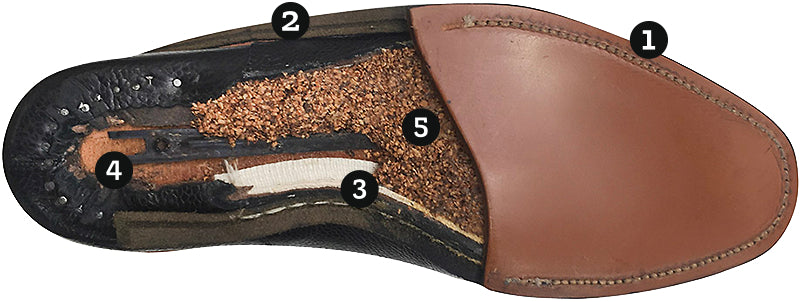
1. The stitching that binds welt and outsole.
2. The welt, the connection between upper and outsole.
3. The insole.
4. The shank for additional stability.
5. The cork layer as insulation against cold and heat. The wearer presses their own footbed into the cork layer, which adds comfort.
John Crocket Shoes
Crocket's Classic shoes are Goodyear welted, and without exception every one of them involves a great deal of handwork. They are known for their excellent value for money. Customers pay nothing to a middleman, because the shoes are made directly for John Crocket.
The Crocket shoe is inspected once it is finished and polished by hand (burnishing). That makes every pair unique.
Classic shoe shapes
English shoes are known to anyone with an interest in classic men’s shoes. It is English shoe shapes that give shoes names such as Oxford, Derby, Brogue or Monk. To describe the different models, a distinction is drawn between categories such as boots, shoes and so on.
Men’s shoes fall into lace-ups, loafers (without lacing) and buckle shoes (monks). Lace-ups divide into the Derby, with open lacing, and the Oxford, a men’s shoe with closed lacing that has been in wide use since 1880.
The term Brogue originally comes from Ireland and Scotland (“brog”). It refers to the broguing on the shoe, which in earlier times served above all to help the shoe dry out through the holes. Today the ornaments are a stylistic device, added on top.
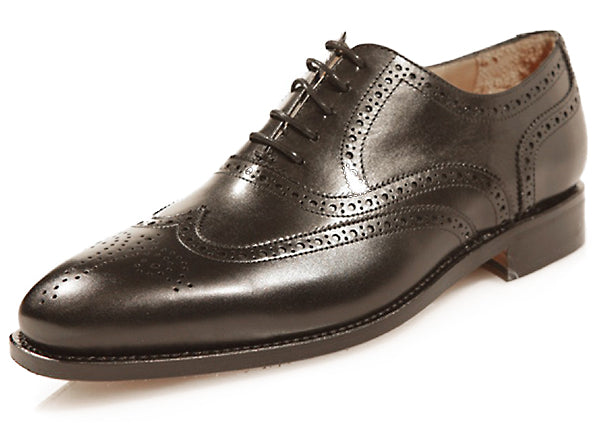
The Full Brogue, also known as a wingtip, has a sweeping pattern of broguing, and in Germany it often goes by the trade name “Budapester”. The wing cap and the applied heel cap, decorated along their edges, are typical. This shoe goes with a suit as well as with jeans, though even in black it should not be worn after 5 pm.
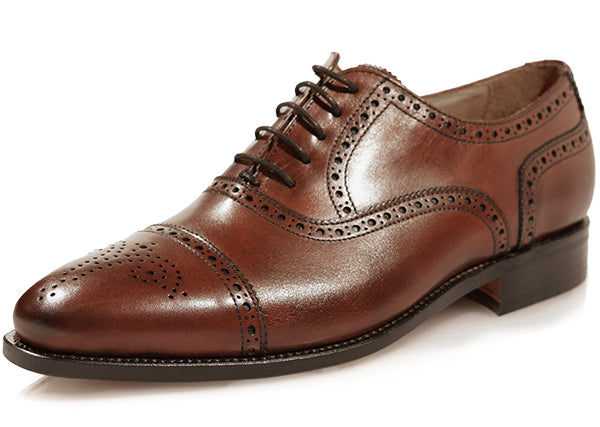
The Semi Brogue differs from the Full Brogue in its less pronounced broguing and its straight toe cap. It is the more restrained, elegant version of the Full Brogue. It can also be worn with a casual jacket.
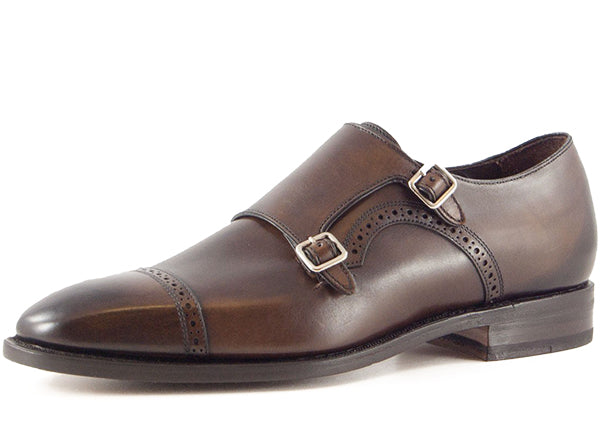
An elegant buckle shoe whose fastening sits to the side, above the vamp. Its name really does come from monks, whose shoes fastened with a strap. The shoe is worn with rather narrow-cut trousers, whose fabric does not cover the fastening.
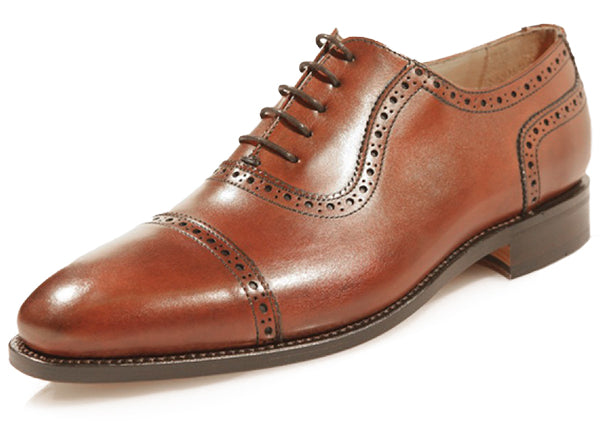
In its broguing, the Punched Oxford sits between the Brogue and the Plain Oxford. With decoration on the toe cap seam, on the border with the quarters and at the heel, it is not as formal as the Plain Oxford and not as playful as the Full Brogue.
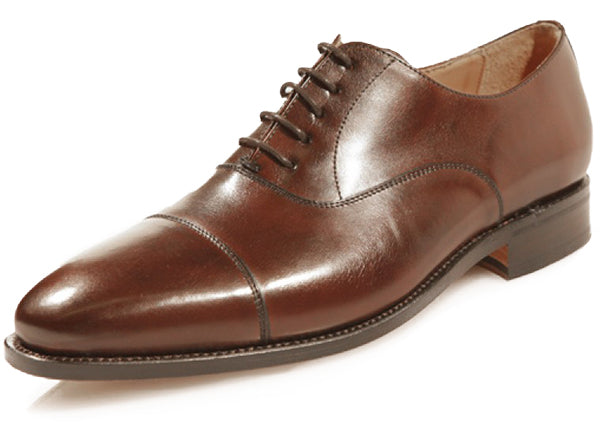
The Plain Oxford is the plainest version of the English shoe. Its only decoration is the seam on the toe cap and the one between the vamp and the quarters. In black it can perfectly well be worn with a dinner suit.
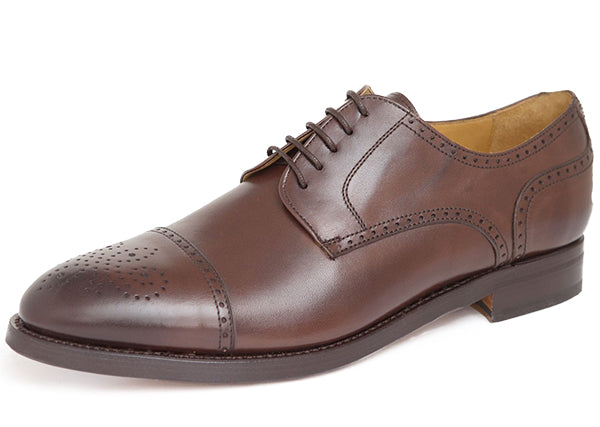
In the Derby cut, the two quarters that carry the lacing sit on top of the continuous vamp. That makes the shoe easy to put on. The rule is: the plainer the design, the more formal the occasion.
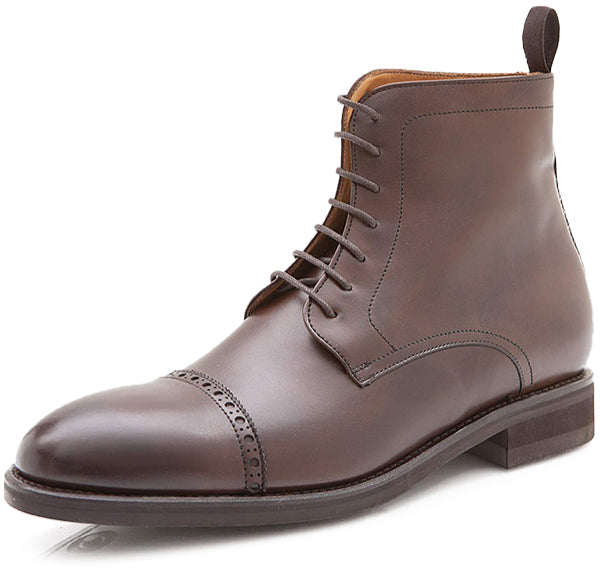
The Derby Punched Oxford Boot is a variant of the John Crocket winter shoes. Rumour has it that the forerunner of this boot was made for Prince Albert, the consort of Queen Victoria, by his shoemaker, for their stays together at Balmoral Castle in Scotland.
Closed-channel stitching
With closed-channel stitching, the thread is concealed from the sole side by the channel lip. That is: the sole is cut open at the side, the groove for the stitching, the channel, is scored, the sole is stitched, and finally the lip is ironed back down over the stitching and not glued. This is a very elaborate variant of the Goodyear-welted method.

Open-channel stitching
With open-channel stitching, the thread is visible in its channel. The correct depth and width of the channel matter a great deal. If the channel is too shallow, the stitching wears through too quickly; if it is too deep, the sole can break.

Vibram sole
The Vibram sole is made by the company of the same name, with its headquarters in Albizzate in Italy. This hard-wearing lug sole is made of rubber. It was originally used above all on mountaineering boots. John Crocket uses this sole for the winter and country collections.

Henry Rust Extra Light
This is a lug sole that is particularly light and comfortable. It gives the wearer something close to a “barefoot” feel when walking.

Dainite sole in red and dark brown
The Dainite sole is made in England by Harboro Rubber. A special rubber compound makes it firmer and more durable than the Vibram sole. The brand name “Dainite” was coined by the residents of Market Harborough, who called the factory the “day and night factory”. We stock the Dainite sole for you in red and dark brown. The Dainite sole is made specifically for Goodyear welted construction, so it can be replaced with ease. The Dainite sole is the ideal bad-weather sole.

The right care

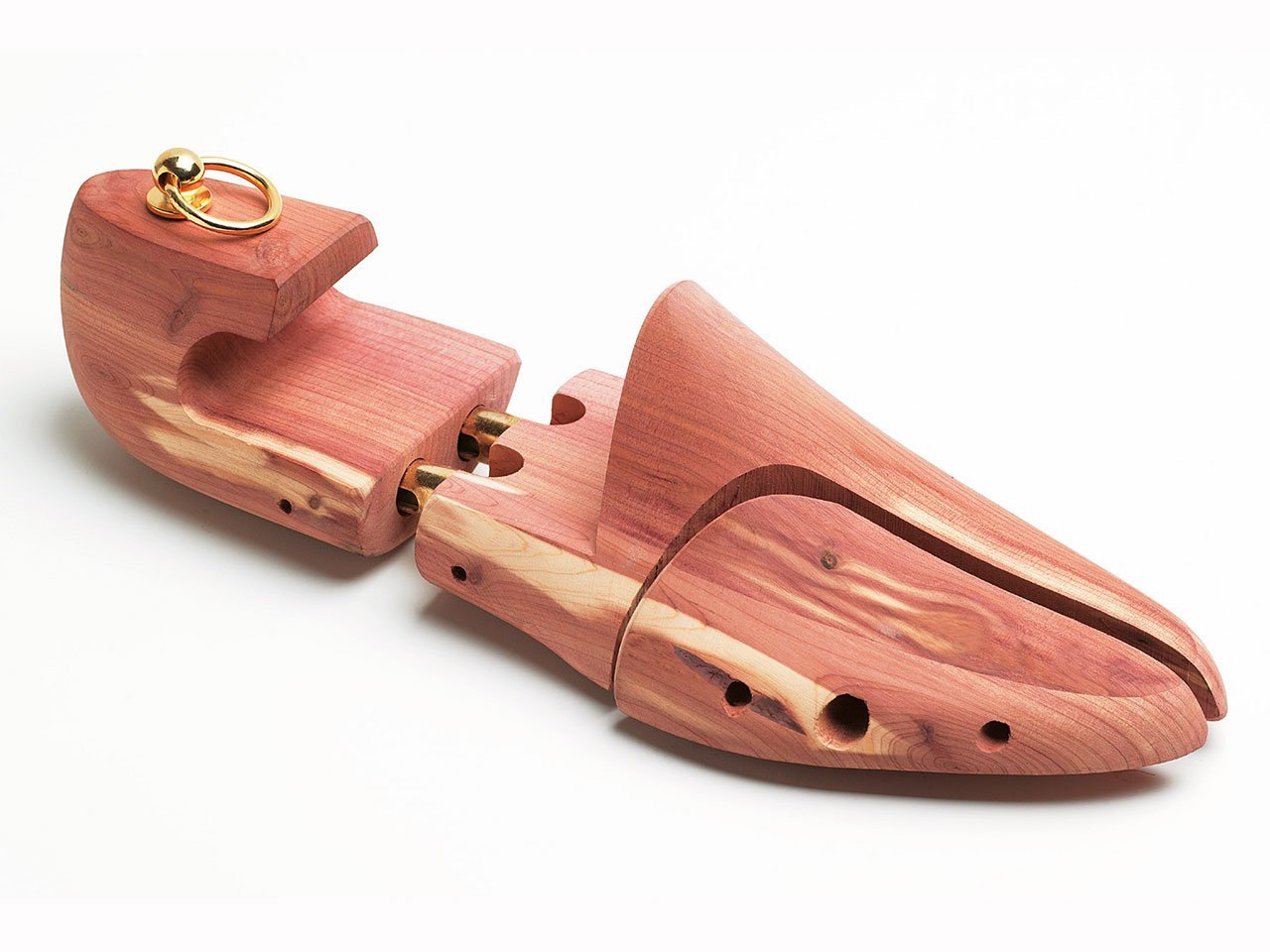
1. It is worth using non-adjustable shoe trees, choosing the next size down from your shoe size. You do yourself and your shoes a particular favour by choosing cedar wood shoe trees. Cedar wood has a pleasant scent and is absorbent, so the moisture that wear leaves in the shoe is drawn out.

2. It takes at least a day for the moisture left by wear to dry out completely. Leave your shoes to the passive care of the shoe trees for a day, and do not wear the same pair two days running.
3. If your shoes have got wet, dry them at normal room temperature. If need be, stuff them with absorbent newspaper so that the moisture is drawn out. Never stand your shoes in front of a fireplace or stove, or on a radiator, because the heat dries the leather out and can lead to cracks in it.
4. Cleaning and polishing your shoes is essential. Dirt and mud come off best with a damp cloth while the shoe is still wet. It is important to remove every trace of dirt before polishing, because otherwise it discolours the leather.
5. The sole can be protected from wear by fitting a wafer-thin protective sole. The advantage: the shoes never need resoling, only the protective sole is replaced.
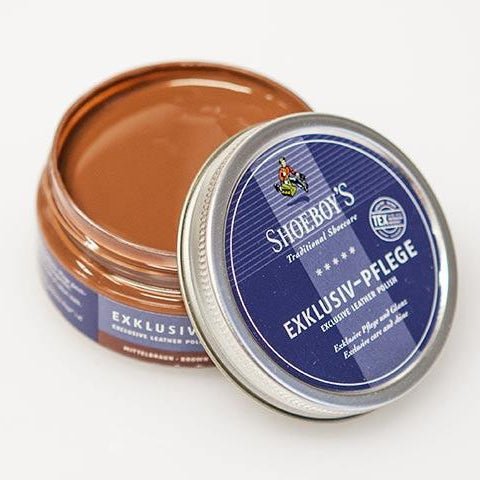
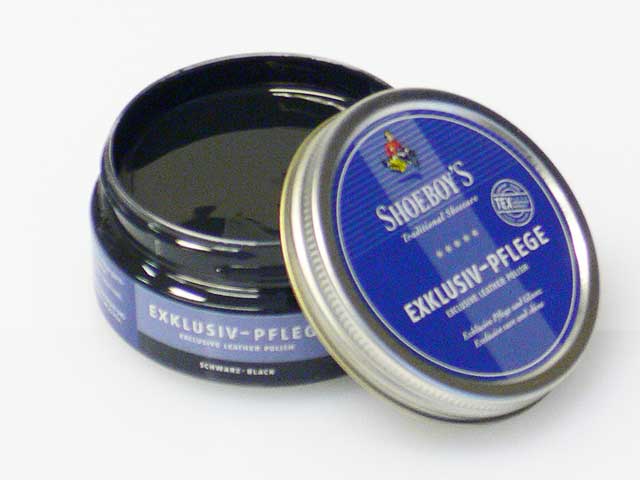
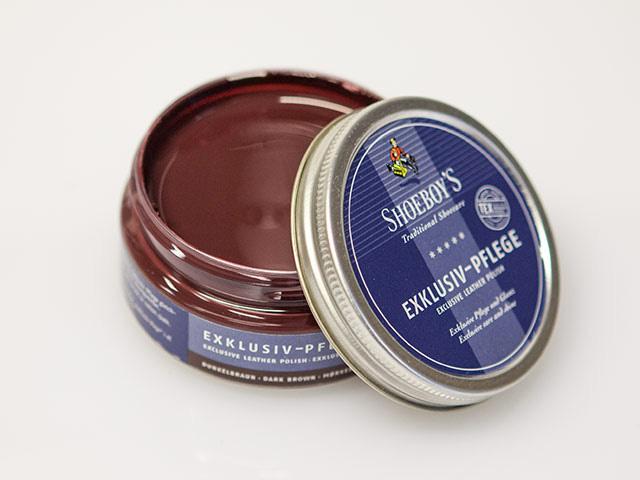
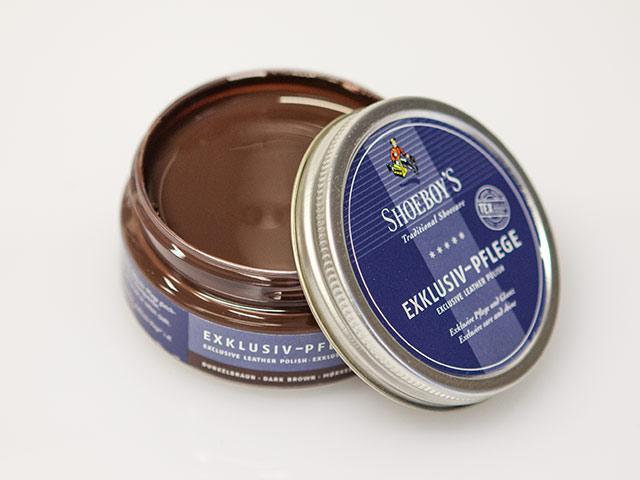
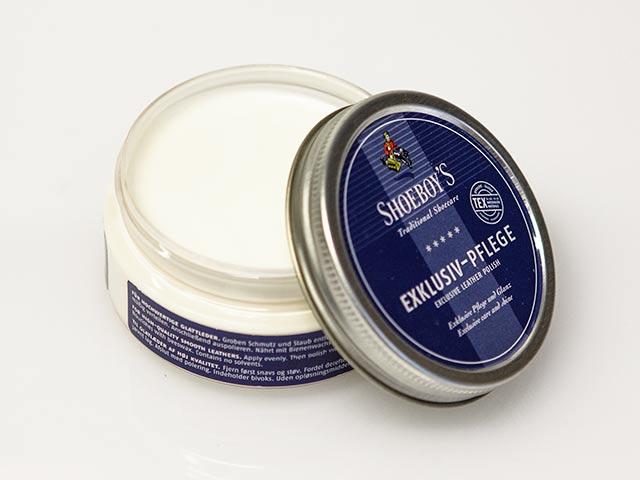
6. Calf and cowhide shoes should be polished with a good wax shoe cream in the right colour. Darker creams discolour the leather. Every shoe takes particular strain in the flex creases. If you feed those areas well and regularly, the leather keeps its suppleness for a long time.

7. Suede shoes must be sprayed generously with suede protector spray before they are first worn. Depending on how much they are worn, this should be repeated every 6 to 12 months. Suede shoes should be cleaned with a wire brush or a stiff brush.
Stains can be removed with a suitable solvent, and shiny patches carefully roughened up with sandpaper.
8. John Crocket supplies every pair of shoes with a soft fabric shoe bag. If you store your pair in it, they stay well protected until you next wear them.

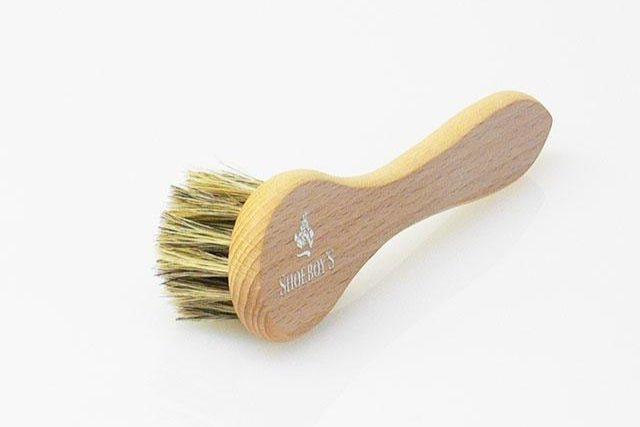
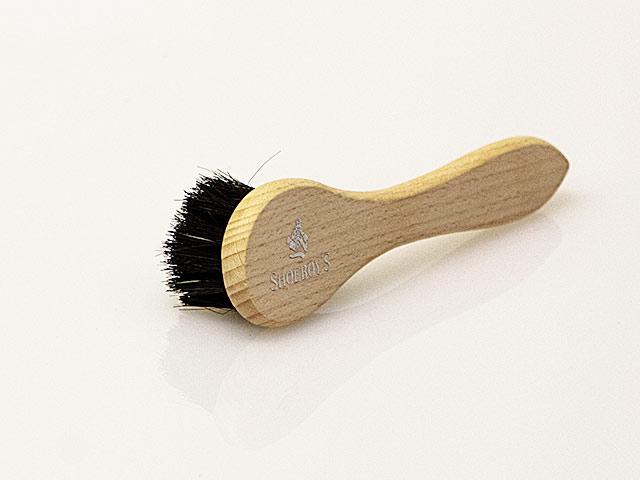
A brush of genuine horsehair is ideal for shoe care.
Shoe Care & Accessories